Introducing the Blog Module for Omeka S
Omeka S is fantastic for publishing digital collections. But if you’ve ever tried to run a content-driven site (especially a portfolio, research hub, or institutional site) you’ve probably felt the gap. There wasn’t a native way to publish posts, manage authors, schedule content, and handle comments in a clean, structured way.
So I built one.
I originally created this module to power my own portfolio site built on Omeka S. But as I worked on it, it became clear that this wasn’t just about my site. A solid blogging system makes every Omeka S site more useful - for announcements, project updates, research highlights, teaching resources, and ongoing storytelling.
This module is designed to make Omeka S more functional for everyone.
What It Adds
The Blog module turns Omeka S into a true publishing platform. It includes:
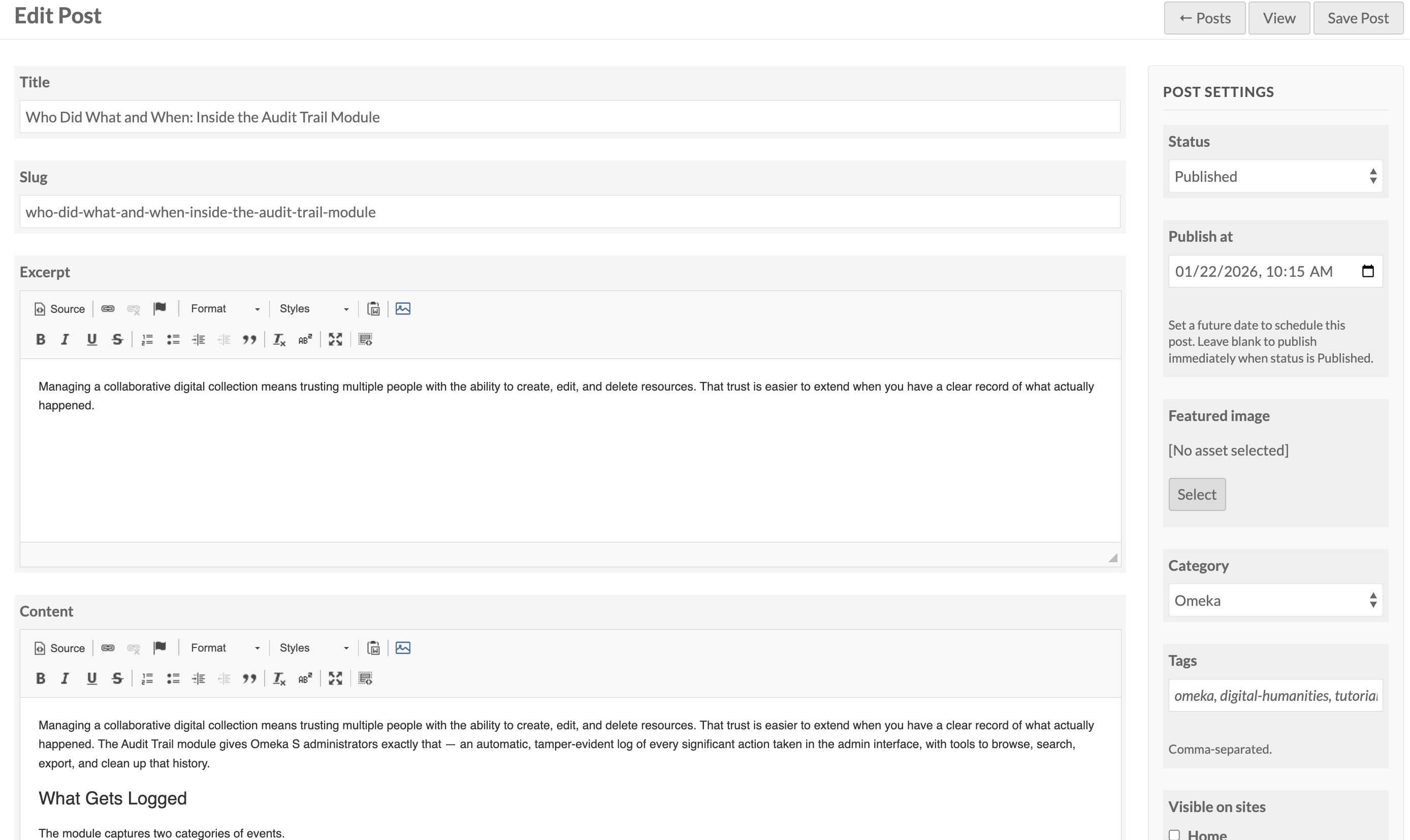
- Full post management (title, slug, excerpt, content, featured image)
- Categories and tags
- Draft, pending, published, and scheduled posts
- Multi-author workflows
- Site-specific visibility (for multi-site installs)
- RSS and Atom feeds
- XML sitemap
- Structured data for search engines
- Optional moderated comments
- Author profile bios and images
- A BlogPosts block you can drop into any site page
- A lightweight REST API
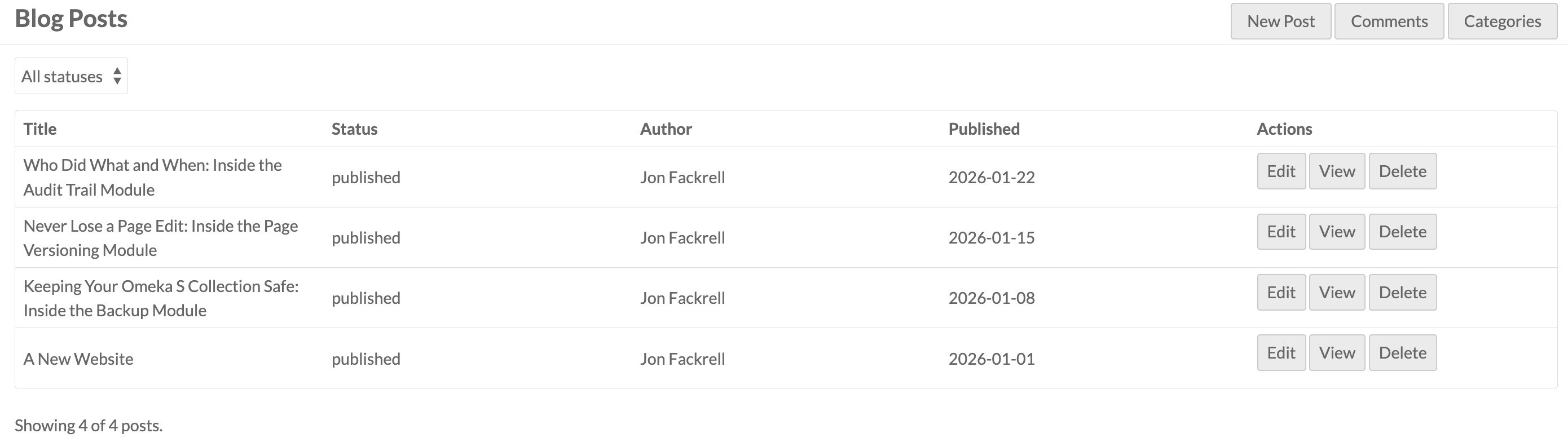
All of it integrates directly into the native Omeka S admin interface.
Built to Feel Native
The writing experience is clean and familiar. Posts are created in a two-column editor with CKEditor for rich content. Featured images use Omeka’s built-in Asset library (no separate media system to manage).
Authors can create and edit their own posts. Editors can review and publish them. Scheduled posts automatically go live at the right time.
Everything respects Omeka S’s multi-site architecture. Posts can appear on one site or across many.
Comments and Moderation
Comments are optional and fully moderated. New submissions are held for approval and moderators receive email notifications. Approved comments appear beneath the post.
You stay in control of the conversation.
Search Engine Friendly
Each post includes structured data (Schema.org BlogPosting), Open Graph tags, RSS feeds, and a sitemap. Search engines and social platforms can understand your content without extra configuration.
Why This Matters
Omeka S has always been powerful for collections. But modern sites often need more than static content. They need updates. Context. Ongoing communication.
This module makes it easy to:
- Share research updates
- Announce new collections
- Publish essays and reflections
- Highlight projects
- Run a professional portfolio
I built it because I needed it. I’m releasing it because I think many other Omeka S sites need it too.